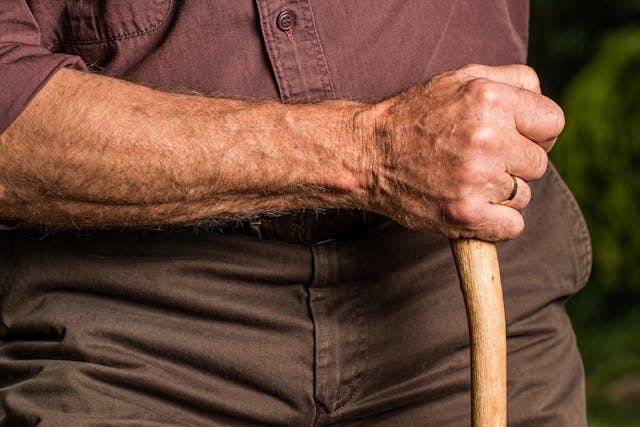

In my years of clinical observation, I have noticed that aging rarely announces itself with a loud bang. Instead, for many, it is a “slow fade”—a quiet, almost imperceptible loss of the physical capabilities we once took for granted. You might notice it when a flight of stairs feels a bit more daunting, or when you find yourself pushing off the armrests to stand up from a favorite chair.
As a physician, I am constantly searching for the “why” behind this decline. Is it purely chronological? Or is there a biochemical lever we can pull to slow this process down? A landmark study from the Yale School of Medicine, published in JAMA, provided a compelling answer that continues to shape how we approach geriatric care today. While many nutrients contribute to general health, researchers found that Vitamin E stands out as a unique and powerful predictor of whether an older adult will maintain their independence or slide into physical frailty.
1. The Yale Study: A Deep Dive into Functional Aging
The study, led by Benedetta Bartali, was meticulously designed to look beyond subjective feelings and focus on objective data. The researchers followed nearly 700 individuals aged 65 or older in the Tuscany region of Italy. This group was chosen because they lived in a community where a traditional Mediterranean diet was the norm—a diet already considered the “gold standard” for longevity.
The team didn’t just ask the participants if they felt “weak.” Instead, they utilized a rigorous set of three clinical tasks to measure Physical Performance :
- Walking Speed: This is often called the “sixth vital sign” in geriatric medicine. It reflects the coordination of the heart, lungs, and neurological system.
- Repeated Chair Stands: This measures the explosive power of the lower body. If you can’t stand up from a chair without help, your independence is at immediate risk.
- Standing Balance: A complex metric involving the inner ear, the brain, and the proprioceptors (sensors) in the muscles.
After collecting blood samples to measure a wide array of micronutrients—including Folate, Iron, and Vitamins B6, B12, D, and E—the researchers tracked these individuals for three years. The goal was to see which nutrient level, if any, could predict who would decline physically.
2. The Surprising Results: Why “Only” Vitamin E?
The most startling finding of the study was not what they found, but what they didn’t find. While many of us assume that a general “cocktail” of vitamins is necessary for strength, the researchers discovered that only Vitamin E was significantly associated with a decline in physical function.
Even when accounting for energy intake and the levels of other vitamins, the link between low Vitamin E and physical frailty remains undeniable.
The 1.62 Factor: The study revealed that the odds of declining in physical function were 1.62 times greater in persons with low levels of Vitamin E compared to those with higher levels.
This suggests that Vitamin E is not just a general marker of “eating well.” It plays a specific, specialized role in protecting the biological systems that allow us to move, balance, and exert force.
3. The Biology of the Shield: Fighting “Biological Rust”
To understand why Vitamin E is so critical, we have to look at its primary function: it is a potent, fat-soluble antioxidant.
Our bodies are constantly under attack by free radicals. These are unstable molecules produced by everything from basic metabolism to environmental pollution. Think of free radicals as “biological sparks” that can cause fires in our tissues. If left unchecked, this leads to oxidative stress, which is essentially the body “rusting” from the inside out.
Vitamin E (specifically the form known as alpha-tocopherol ) is uniquely positioned to stop this “rusting” because it sits directly inside the fatty membranes of our cells. Here is how it protects your physical mobility:
A. Protecting the Muscle Membranes
Muscle fibers are constantly contracting and relaxing. This process generates a lot of metabolic heat and free radicals. Vitamin E protects the delicate membranes of these muscle cells, ensuring they remain resilient and capable of repair. Without it, the muscle fibers become “leaky” and lose their power.
B. Shielding Our DNA
Oxidative stress is a major cause of DNA damage. When our DNA is damaged, the cells cannot replicate correctly. This leads to a loss of the “youthful” genetic switches we discussed in previous articles. Vitamin E helps keep the library of our genetic instructions clean and readable.
C. Preventing Vascular Aging
The muscles can only move if they have oxygen. Oxygen is delivered via the blood vessels. Oxidative stress contributes to atherosclerosis (hardening of the arteries). By protecting the lining of our blood vessels, Vitamin E ensures that our muscles receive the fuel they need to keep us walking and standing.
4. The Quiet Decline: Why Deficiency Goes Unnoticed
In my practice, I find that Vitamin E deficiency is one of the most “quiet” nutritional issues. Unlike a Vitamin C deficiency, which might cause visible issues with gums or skin, a lack of Vitamin E manifests as a slow, steady erosion of strength.
Many people assume they are getting enough because they feel “fine.” But the Yale study showed that the decline happened over three years. It is a cumulative process. By the time a patient realizes they are having trouble standing up from a chair, the oxidative damage to their muscle membranes has been happening for months or even years.
5. Sarcopenia and the “Corrosion” of Muscle
One of my primary focuses in Geriatric Rehab is Sarcopenia —the age-related loss of muscle mass and quality. While we use Progressive Resistance Training (PRT) to stimulate muscle growth, we need to ensure the muscle actually has the capacity to grow.
If a senior is in a state of Vitamin E deficiency, their muscles are in a state of “corrosion.” Exercise in this state can sometimes be a double-edged sword: while it provides the signal to grow, the metabolic stress of the exercise produces more free radicals. If the “antioxidant shield” is missing, the muscle can struggle to repair itself after the workout. This is why nutritional optimization is a non-negotiable partner to physical therapy.
6. Practical Nutrition: Fueling Your Shield
The Yale researchers noted that only one person in their entire study used Vitamin E supplements. This means the benefits seen in the “high Vitamin E” group came entirely from whole foods.
Vitamin E is fat-soluble, meaning it requires healthy fats to be absorbed into your system. Here is how you can optimize your levels naturally:
Top Dietary Sources of Vitamin E
| Food Source | Serving Size | Approx. Vitamin E Content |
| Wheat Germ Oil | 1 tablespoon | 20 mg |
| Sunflower Seeds | 1 ounce | 10 mg |
| Almonds | 1 ounce | 7.3 mg |
| Sunflower Oil | 1 tablespoon | 5.6 mg |
| Hazelnuts | 1 ounce | 4.3 mg |
| Spinach (Boiled) | ½ cup | 1.9 mg |
| Broccoli (Boiled) | ½ cup | 1.1 mg |
The “Fat” Factor
Because Vitamin E travels in fat, a “low-fat” diet can actually be a risk factor for physical decline. Incorporating healthy fats like olive oil, avocados, and nuts is essential for ensuring the Vitamin E you eat actually reaches your blood and your muscles.
7. A Global Perspective: Philippines vs. Spain
My practice bridges two very different cultures, yet the biological need for Vitamin E is the same.
- In the Philippines: The traditional diet can sometimes be heavy in refined carbohydrates and low in the specific nuts and oils that provide Vitamin E. For our Filipino seniors and OFWs, I often recommend incorporating more locally available seeds and ensuring they don’t fear the “healthy fats” found in avocados and certain oils.
- In Spain: We are surrounded by a Mediterranean abundance of almonds and high-quality olive oil. However, I often find that seniors living alone may simplify their diets too much, missing out on the variety needed to keep their antioxidant levels high.
Regardless of where you are, the goal is the same: to prevent the “rusting” of your physical independence.
8. Summary: Taking Charge of Your Resilience
The takeaway from the Yale study is a hopeful one. Physical decline is not a “sentence” that we simply have to accept. It is a process influenced by measurable biological markers.
By focusing on your antioxidant shield, you are:
- Protecting your muscle membranes from the stress of daily movement.
- Supporting your vascular health to ensure your muscles are well-fueled.
- Maintaining your DNA integrity to allow for long-term repair and regeneration.
How I Can Help You Maintain Your Strength
Reclaiming your vitality requires a plan that looks at the “whole person”—combining advanced internal medicine with specialized physical rehabilitation. I am dedicated to helping my patients translate this science into a personalized strategy for a long, active life.
Online Medical Consultations (Philippines & Worldwide)
Distance should never be a barrier to expert geriatric care. I offer 24/7 secure online consultations for the Filipino community and OFWs globally. We can work together to ensure your nutritional and metabolic profile is optimized for your physical goals.
- Nutritional & Vitality Assessments: Identifying the “quiet” deficiencies that may be slowing you down.
- Chronic Disease Management: Addressing the inflammation that accelerates your need for antioxidants.
- Lab Result Interpretation: Getting a clear, expert picture of your markers through a geriatric lens.
BOOK YOUR CONSULTATION ON SERIOUSMD
Geriatric Rehab & Anti-Aging Clinic (Alicante & Costa Blanca, Spain)
For the international community in the Valencian region, I provide specialized services to help you stay strong, balanced, and independent.
Learn more at: Costa Blanca Bridge|puentecostablanca.es
Our Specialized Anti-Aging Services in Spain:
- Sarcopenia y Vitalidad (Sarcopenia & Vitality): Medically-guided PRT programs to build the muscle mass your body needs.
- Prevención de Caídas (Fall Prevention): Otago-based balance protocols to restore your confidence and stability.
- Autonomía y Confort (Autonomy & Comfort): Managing joint stiffness and ergonomics for a pain-free Mediterranean lifestyle.
- Entrenamiento Neuro-Functional (Neuro-Functional Training): Supporting the brain-body axis to ensure your nerves and muscles are in perfect sync.
Final Thoughts
The discovery that Vitamin E is a unique predictor of physical decline is a powerful call to action. We are learning that our independence is built on a foundation of molecular health. By supporting our bodies with the right antioxidants and maintaining our metabolic resilience, we can keep the “slow fade” at bay and live lives defined by strength and autonomy.
Let’s keep your “Invisible Shield” strong.
Dr. Marie Gabrielle A. Laguna, MSc, MD, FPCP, FDip (Geriatric Rehab, UK) Internal Medicine Specialist | Geriatric Rehab Expert