In my two decades of clinical practice—whether I am walking the corridors of a busy hospital in the Philippines or consulting with the vibrant retirement community in Alicante, Spain—I have seen that a fall is rarely “just a fall.” For an older adult, a fall is often the first domino in a sequence that can lead to a permanent loss of independence.
As we move through January 2026, the data regarding geriatric falls has reached a crisis point. Falls are the leading cause of both fatal and nonfatal injuries in the United States for adults aged 65 and older. The statistics are staggering: 1 in 4 older adults falls annually, resulting in 27,000 deaths, 8 million emergency department (ED) visits, and 800,000 hospitalizations.
However, a landmark study from Florida Atlantic University’s (FAU) Schmidt College of Medicine, published in the American Journal of Emergency Medicine, has identified a critical “gap” in our safety net. When an older adult suffers a head injury from a fall and visits the emergency room, the system often fails them the moment they are discharged. This “suboptimal follow-up” means we are missing the golden window to prevent the next, potentially fatal, fall.
1. The Anatomy of a High-Risk Event: Why Head Trauma is a Warning Sign
When an older adult suffers a “ground-level fall”—essentially tripping while walking or standing—and hits their head, the physiological stakes are significantly higher than they are for a younger person.
The Vulnerable Brain
As we age, the brain undergoes a process called atrophy, meaning it shrinks slightly. This creates more space between the brain and the skull, stretching the delicate “bridging veins.” Even a minor bump to the head can cause these veins to tear, leading to a subdural hematoma (bleeding on the brain).
The Anticoagulant Complication
Many of my patients are on blood thinners (anticoagulants) for heart conditions like Atrial Fibrillation (as we discussed in our turn on AFib medications). While these drugs prevent strokes, they turn a minor head bump into a life-threatening hemorrhage.
The FAU study followed 1,527 patients who suffered exactly this type of injury. These patients weren’t just “shaken up”; they had sustained head trauma. In any logical medical system, this should trigger an immediate and aggressive prevention strategy. Yet, the research shows that once the patient leaves the ED, the “ball is dropped.”
2. The FAU Study: Mapping the “Follow-Up Famine”
The study, led by Dr. Richard Shih, was conducted over one year at two major Florida hospitals. Researchers didn’t just look at the hospital records; they called the patients 14 days after discharge to ask three critical questions:
- Have you followed up with your primary care physician (PCP)?
- Did your PCP assess the reason you fell?
- Have you started any prevention interventions?
The “Suboptimal” Reality
The results were a wake-up call for the medical community. Despite the high risk of a repeat fall, the care coordination was severely lacking:
| Metric | Achievement Rate | The Clinical Gap |
| Follow-up with PCP | 60% | 40% of patients had no medical oversight after a head injury. |
| Fall Assessment by PCP | 72% (of those who followed up) | 28% of doctors saw the patient but didn’t ask why they fell. |
| Adoption of Prevention | 56% | Nearly half of the patients changed nothing about their lifestyle or home. |
“We found that older patients treated in the emergency department for a fall-related head injury have suboptimal primary care physician follow-up and inadequate adoption of fall prevention strategies,” said Dr. Richard Shih.
3. The “Communication Gap”: Why EDs and PCPs Are Out of Sync
One of the most concerning findings was that even when a patient did go to their primary doctor, 44% did not receive any fall prevention interventions. The Fragmented Record
In my focus on Intellectual Honesty, we must admit that the Emergency Department is designed for “disaster management,” not “prevention.” The ED doctor ensures the brain isn’t bleeding and then discharges the patient. If the discharge summary doesn’t reach the PCP, or if the patient doesn’t realize the importance of the visit, the fall is treated as an isolated accident rather than a symptom of a deeper problem.
The “Hypertension and Cancer” Paradox
Interestingly, the study found that patients with a history of hypertension or cancer were significantly more likely to follow up. This suggests that patients who are already “in the system” for chronic disease are better at navigating follow-up. However, for a patient who considers themselves “healthy” but just had a “bad trip,” the medical system fails to emphasize that their fall is a medical emergency in slow motion.
4. The Intervention Spectrum: What Works to Stop the Next Fall?
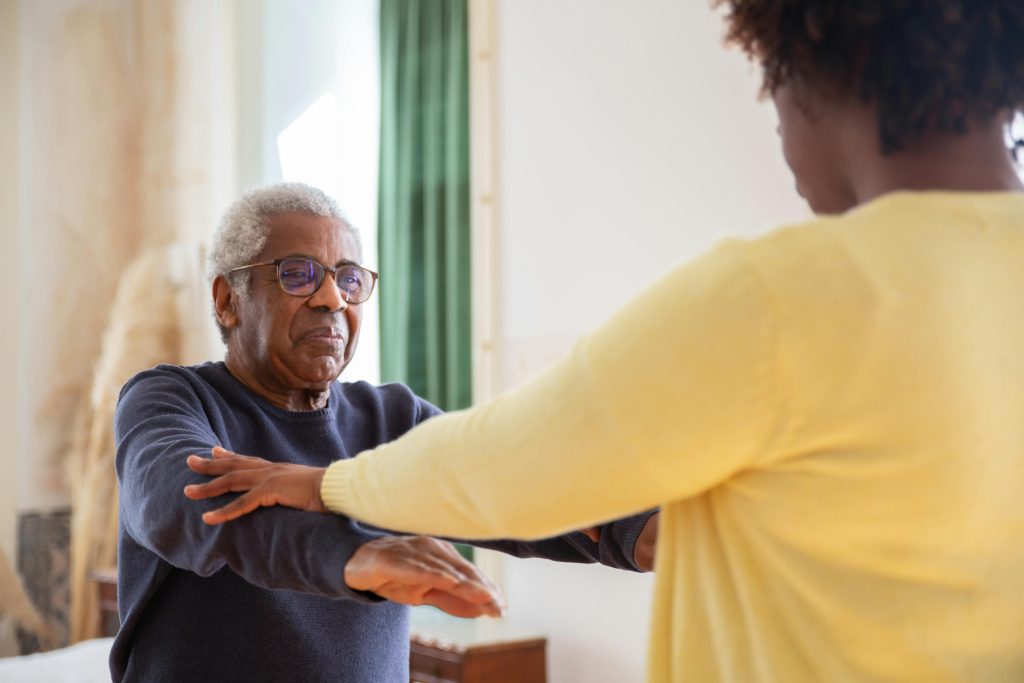
When a PCP does intervene, the study found that Physical Therapy (PT) is the most common and effective recommendation (68%). PT isn’t just about exercises; it’s about a total “re-programming” of the patient’s mobility.
The Multi-Toolbox of Prevention
If a patient answered “yes” to starting an intervention, the FAU researchers categorized them into several vital types:
- Exercise Activity: Building the leg strength identified in the Edith Cowan University study on eccentric exercise.
- Home Modification: Removing throw rugs, adding grab bars, and improving lighting.
- Mobility Aids: Correctly sizing walkers or canes.
- Medication Change: Reviewing drugs (like the AFib meds or sleeping pills) that cause dizziness.
- Footwear Modification: Moving away from slippers or high heels to sturdy, rubber-soled shoes.
The Power of Home Safety
As an expert in Geriatric Rehab, I often tell my patients in Spain and the Philippines: Your home is your primary treatment center.
When referred to PT, patients are much more likely to adopt these home safety modifications. A physical therapist walks through the “mechanics” of the patient’s life, identifying the trip hazards that a busy doctor might miss in a 15-minute office visit.
5. Closing the Loop: A 2026 Strategy for Fall Prevention
The FAU study concludes with a strong endorsement: fall-risk assessment and patient education must be performed both in the ED and by the PCP. We cannot assume the patient will “know” what to do next.
The “Full Circle” Protocol
In 2026, we are moving toward a model where the ED discharge triggers a “Fall Prevention Bundle”:
- Immediate PT Referral: Not waiting for the PCP visit.
- Medication Reconciliation: An automated check for drugs that increase fall risk.
- The 14-Day Call: Implementing the very follow-up phone call used in the FAU study as a clinical standard.
Integration with the “Pillars of Aging”
As we discussed in the Seven Pillars of Aging, a fall is often a sign of Loss of Proteostasis (muscle quality) or Deregulated Nutrient Sensing. By treating the fall, we aren’t just preventing a broken hip; we are addressing the Sarcopenia and CKM Syndrome that contributed to the lack of balance in the first place.
Summary: From “Accident” to “Medical Opportunity”
The FAU research is a call to action for Shared Decision-Making.
- Falls are not random: They are predictable and preventable.
- Head trauma is a high-alert event: It requires more than just an ER visit.
- The PCP is the anchor: Follow-up must include a specific “Why did you fall?” assessment.
- Physical Therapy is the gold standard: It is the bridge between the hospital and a safe home.
How I Can Help You Close the Follow-Up Gap
If you or a loved one has suffered a fall, “getting back on your feet” is a medical process that requires oversight. I am here to help you navigate the system to ensure nothing is missed.
Online Medical Consultations (Philippines & Global)
For the global Filipino community, I offer 24/7 secure consultations via SeriousMD. We approach fall prevention through a systemic, geriatric lens.
- Post-Fall Medication Review: Analyzing your prescriptions for anything that might be causing the dizziness or balance issues identified in the FAU study.
- Prevention Strategy Design: Helping you choose the right mobility aids and exercise activities based on your specific health profile.
- Coordination Advocacy: Drafting a summary for your PCP that highlights the head trauma and requests a formal fall-risk assessment.
BOOK YOUR MEDICAL CONSULTATION NOW ON SERIOUSMD
Geriatric Rehab & Anti-Aging Clinic (Alicante & Costa Blanca, Spain)
For the international community in Spain, we specialize in the “Intense Rehabilitation” that the FAU study recommends to prevent recurrent falls.
Visit our local sites: Puente Costa Blanca (.com) |Puente Costa Blanca (.es)
Our Specialized Services in Spain:
- Sarcopenia & Vitality: Building the “braking power” and leg strength needed to prevent the next fall.
- Home Safety Audits: Providing guided checklists to modify your Costa Blanca home for maximum autonomy.
- Neuro-Functional Training: Brain-body drills to improve your “reaction time” and balance recovery.
- Autonomy & Comfort: Managing the fear of falling through Mindfulness and CBT, ensuring you stay active and independent.
Final Thoughts from Dr. Marie
A fall-related head injury is a profound moment of vulnerability. It is a signal from the body that the “Pillars of Aging” are under stress. By acknowledging the “suboptimal” nature of our current follow-up and taking intentional, coordinated steps toward prevention, we can ensure that a fall is just a temporary setback, not the end of your independence.
Let’s close the gap and keep you standing strong.
Dr. Marie Gabrielle A. Laguna, MSc, M.D., FPCP, FDip (Geriatric Rehab, UK)Internal Medicine & Senior Health Specialist