In the world of internal medicine and geriatric rehabilitation, we spend a significant amount of time focusing on the “quantifiable” pillars of health: blood pressure readings, HbA1c levels, muscle mass percentages, and pharmacological dosages. We treat the body as a complex biological machine that requires specific inputs to maintain its function. However, as we move deeper into the science of Geroscience—the study of the biology of aging—we are discovering that the “social engine” of the human body is just as vital as the metabolic one.
A landmark study from the University of Texas at Austin, published in Social Science & Medicine (December 2025), has provided us with some of the most compelling evidence to date that our social behavior is a primary driver of brain health. By following over 30,000 adults for more than two decades, researchers found that regularly helping others—for as little as two to four hours a week—can slow age-related cognitive decline by a staggering 15% to 20%.
For those of us working with the Filipino community worldwide and the international community in Spain, this research offers a profound “social prescription” that costs nothing but has the potential to save our cognitive independence.
1. Beyond the Household: Redefining “Helping”
We often think of “help” as something we do for our immediate family—cooking for a spouse, caring for a child, or helping a sibling. While these are noble acts, the UT Austin study specifically focused on helping people outside your own household.
The researchers made a crucial distinction between two types of helping, both of which were found to be equally powerful for the brain:
Formal Volunteering
This involves scheduled, organized work through a non-profit, a church, or a community organization. About 1 in 3 older Americans participate in this type of structured service. It provides a sense of “role identity”—the feeling that you are a necessary part of a larger mission.
Informal Helping
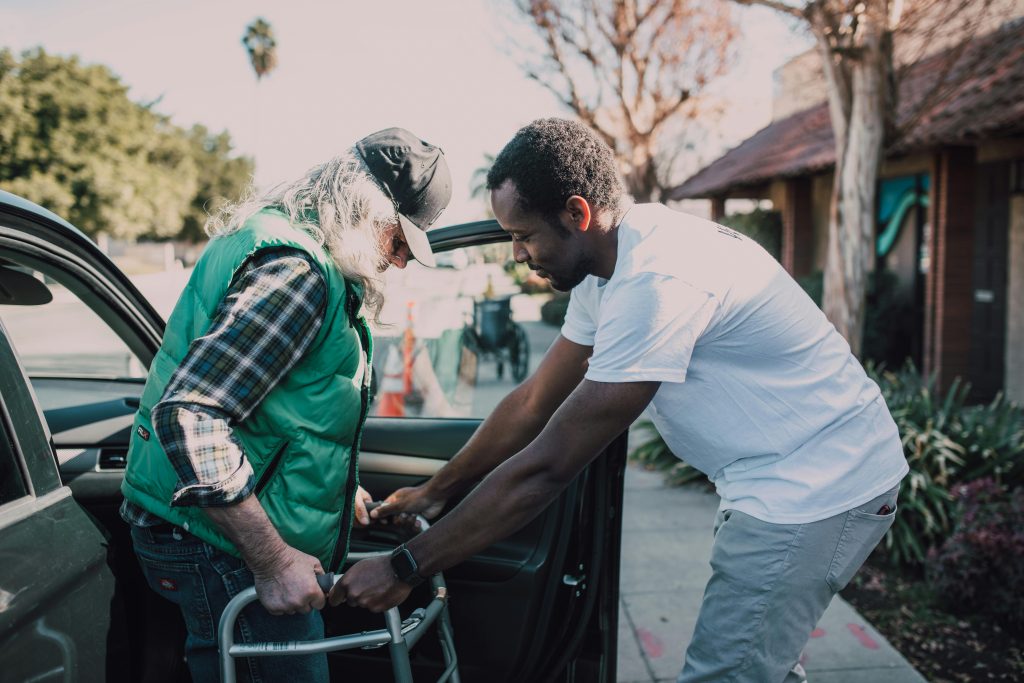
This is where the majority of the “anti-aging magic” happens for most people. More than half of seniors regularly engage in informal help. This includes giving a neighbor a ride to the doctor, helping a friend with their garden, assisting a relative with their taxes, or watching a neighbor’s children.
For years, many in the medical field assumed that informal helping was “lesser” because it lacks social recognition. This study turned that assumption on its head. The brain doesn’t need a certificate or a “thank you” plaque; it needs the cognitive load and emotional reward that comes from the act of giving.
2. The 20-Year Insight: Why the Benefits Accumulate
What makes this research so robust is its longitudinal nature. By using data from the national Health and Retirement Study, which tracks U.S. residents over age 51 dating back to 1998, researchers were able to see the “long game” of brain aging.
They found that the cognitive benefits were not just temporary boosts. Instead, they were cumulative. Much like the “compound interest” in a savings account, the small cognitive gains from helping others week after week added up over 20 years. Those who consistently stayed engaged in helping behaviors developed a “slower slope” of decline compared to those who remained isolated.
3. The “Therapeutic Dose”: Finding the 2 to 4 Hour Sweet Spot
In pharmacology, we always search for the “minimum effective dose”—the smallest amount of an intervention that produces the desired result. For brain longevity, the study identified a clear “sweet spot”: two to four hours per week.
Why this specific duration?
- Under 2 Hours: The “dose” may not be enough to trigger the neuro-hormonal changes needed to protect the brain.
- Over 4 Hours: While still beneficial, the researchers found that 2-4 hours provided the most consistent and robust results. This suggests that you don’t need to dedicate your entire life to service to save your brain; modest, consistent engagement is the key.
4. The Biological Mechanism: Cooling the “Inflammatory Fire”
How does helping a neighbor translate to a younger hippocampus? As a physician with an interest in “inflamm-aging,” I find the biological link fascinating. Lead researcher Sae Hwang Han discovered in related work that volunteering actually counters the harmful effects of chronic stress on systemic inflammation.
When we age, our bodies enter a state of low-grade, chronic inflammation. This inflammation acts like a slow fire, damaging our neurons and contributing to the development of Alzheimer’s and other dementias.
Helping others triggers a “reward response” in the brain, releasing chemicals like oxytocin and dopamine. These hormones are natural anti-inflammatories. They signal the immune system to “stand down,” reducing the levels of C-reactive protein (CRP) and other markers of systemic inflammation. For people who already have high levels of inflammation, the cognitive payoff of helping others was found to be even stronger.
5. The “Cognitive Exercise” of Social Interaction
Beyond the chemical changes, helping others is a form of high-level “Neuro-Functional Training.” Think about what is required to help a friend with their taxes or to coordinate a community carpool:
- Executive Function: Planning, organizing, and problem-solving.
- Social Cognition: Reading emotions, practicing empathy, and communicating clearly.
- Memory: Recalling details about the person’s needs and the steps required to help them.
This “cognitive workout” keeps the neural pathways in the prefrontal cortex and the hippocampus—the areas most vulnerable to aging—active and resilient. It is the definition of “use it or lose it.”
6. The Danger of Withdrawal: A Warning for Seniors
The UT Austin study also highlighted a “risk factor” that we must take seriously: completely withdrawing from helping roles is associated with worse cognitive function.
In my work in Geriatric Rehab, I often see the “retirement slump.” When an individual stops working and also stops contributing to their community or family, their cognitive decline can accelerate rapidly. This suggests that the “helper role” is a protective shield. When we take that shield away, the brain becomes more vulnerable to the stressors of aging.
7. Addressing Loneliness: A Public Health Priority
We are currently facing what many have called a “loneliness epidemic.” Isolation is a known risk factor for premature death, carrying a biological impact comparable to smoking 15 cigarettes a day.
For our Overseas Filipino Workers (OFWs), loneliness is a major hurdle. Being far from home and the familiar support networks of the Philippines can lead to high levels of cortisol and systemic inflammation. Similarly, for expatriates in Spain (Alicante and Costa Blanca), the language barrier and the distance from lifelong friends can create a “social vacuum.”
The 2025 research suggests that helping others is the antidote. By reaching out to help a fellow OFW or connecting with neighbors in their new Spanish community, these individuals aren’t just being “nice”—they are performing a vital act of self-care for their own brains.
8. Clinical Strategy: Implementing Your “Social Prescription”
If I were to design a “Brain Health Action Plan” based on this study, it would look like this:
Phase 1: The Audit
Look at your current week. Are you spending any time helping someone outside your home? If the answer is zero, don’t worry—most people start there.
Phase 2: The “Informal” Start
Start small. Can you offer to pick up groceries for a neighbor? Can you spend one hour a week helping a relative with their computer? These everyday acts are the building blocks of cognitive resilience.
Phase 3: The 2-4 Hour Goal
Work your way up to that “sweet spot.” Find a consistent time each week where you can be “the helper.” The consistency is what signals your brain to stay in “regeneration mode.”
9. Sarcopenia, Vitality, and the Brain-Body Connection
As a specialist in Sarcopenia y Vitalidad, I always remind my patients that the body and brain move together. If you aren’t physically strong enough to help your neighbor with their garden, you miss out on the cognitive benefit of that act.
This is why our Progressive Resistance Training (PRT) and Otago balance protocols are so important. We aren’t just building muscle for the sake of muscle; we are building the “functional reserve” that allows you to stay engaged in your community. When you are strong enough to help others, your brain reaps the rewards.
10. A Global Vision for a Connected Society
The findings from 2025 and 2026 are clear: we are a social species, and our brains are “wired” for altruism. Whether you are in Iloilo, London, Dubai, or Alicante, your brain thrives when you are useful.
My mission is to help you stay strong enough and sharp enough to continue making those valuable contributions to the world around you. We are not designed to fade away in isolation; we are designed to be part of a vibrant, helping community.
How I Can Help You Navigate the Science of Longevity
Achieving a “younger brain” requires a multi-pronged approach: metabolic health, physical strength, and social engagement. I am here to help you coordinate all three.
Online Medical Consultations (Philippines & Global)
For the Filipino community and OFWs worldwide, I offer 24/7 secure consultations to help you manage the physical and mental hurdles of aging.
- Cognitive Health Screenings: Evaluating your memory and providing “social prescriptions” tailored to your lifestyle.
- Chronic Disease & Inflammation Management: Addressing the biological factors (like hypertension and diabetes) that contribute to brain aging.
- Pharmacological Guidance: Ensuring your medications support your overall vitality.
BOOK YOUR CONSULTATION ON SERIOUSMD
Geriatric Rehab & Anti-Aging Clinic (Alicante & Costa Blanca, Spain)
In the Valencian region, our specialized programs are designed to keep you physically capable and socially connected.
Visit our local sites: Puente Costa Blanca |puentecostablanca.es
Our Core Services in Spain:
- Sarcopenia y Vitalidad: PRT programs to ensure you have the strength to stay active and helpful.
- Prevención de Caídas: Otago balance protocols to keep you moving safely in your community.
- Entrenamiento Neuro-Funcional: Brain-body drills that mimic the cognitive load of social interaction.
- Autonomía y Confort: Managing discomfort so you can focus on the joys of engagement.
Final Thoughts
The 2025 research from UT Austin is a beautiful reminder that the best thing we can do for our own health is to care for the health of others. By dedicating just a few hours a week to those around us, we are literally keeping our own brains younger, sharper, and more resilient.
Let’s work together to keep you connected, useful, and vibrant for years to come.
Dr. Marie Gabrielle A. Laguna, MSc, M.D., FPCP, FDip (Geriatric Rehab, UK) Internal Medicine Specialist | Geriatric Rehab Expert