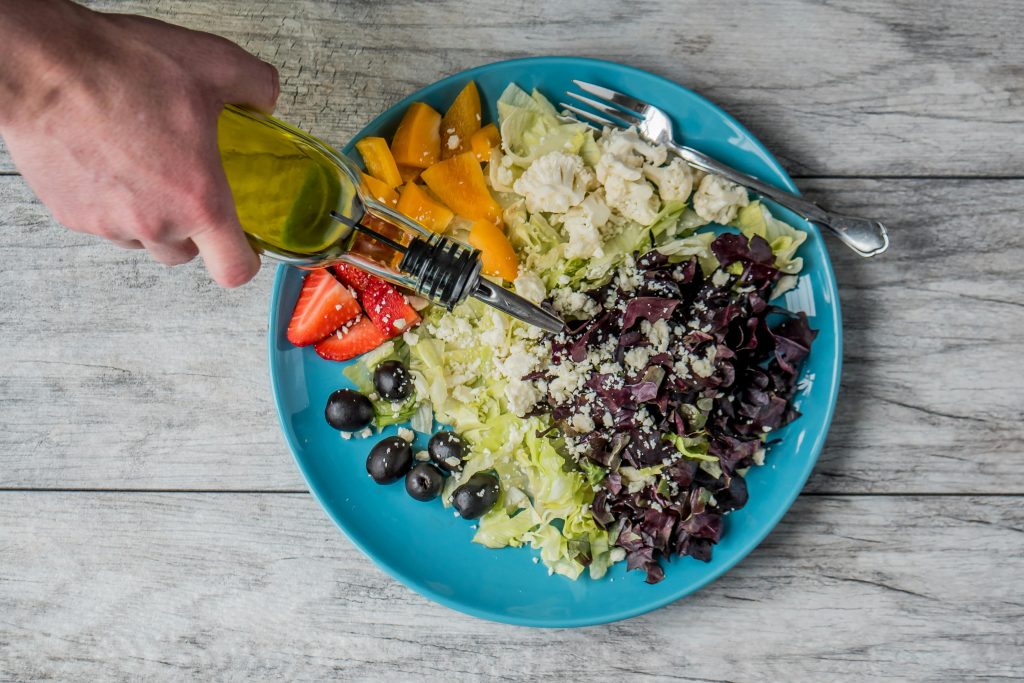
In my clinical practice, I often meet dedicated “health-seekers” who eat large bowls of fresh greens but insist on skipping the dressing or using fat-free alternatives. They do this out of a genuine desire to cut calories, manage their weight, or perhaps out of a lingering fear of fats that was popularized in the late 20th century. However, as we look deeper into the science of nutrition and metabolic health, we find that some of our most “virtuous” dieting habits might actually be working against us.
A significant study from Iowa State University , published in the American Journal of Clinical Nutrition , suggests that by skipping the oil in our salads, we may be inadvertently throwing away the most valuable parts of our meal. The research, led by Associate Professor Wendy White, indicates that a “spoonful of oil” acts as a biological golden key, unlocking the full nutritional potential of vegetables. Without a source of fat, many of the most vital micronutrients in your salad simply pass through your system without ever reaching your bloodstream.
1. Understanding Bioavailability: The Science of the “Golden Key”
To understand why this happens, we have to look at the concept of bioavailability . Bioavailability refers to the proportion of a nutrient that is digested, absorbed, and made available for use by the body. You can eat the most nutrient-dense kale in the world, but if your body cannot absorb the compounds within it, the nutritional value is effectively zero.
Many of the most powerful anti-aging compounds in vegetables are fat-soluble . This means they do not dissolve in water; instead, they require fat molecules to be packaged into “micelles” in the small intestine. These micelles act like tiny transport vehicles that carry the nutrients across the intestinal wall and into the lymphatic system and blood.
The Iowa State study was rigorous. It followed volunteers who consumed salads with varying levels of soybean oil—a common base for dressings. By testing their blood afterward, researchers weren’t just guessing; they were measuring the exact amount of “medicine” that made it into the human system.
2. The “Essential Eight”: What You Miss When You Skip the Fat
The research found that adding oil to a salad significantly promoted the absorption of eight different micronutrients that are critical for longevity and disease prevention. Let’s look at why these specific nutrients are so important for a body that wants to age with vitality.
The Four Carotenoid Powerhouses
- Alpha-carotene & Beta-carotene: These are the precursors to vitamin A. They are famous for supporting immune function and skin health, but they are also potent antioxidants that fight the oxidative stress that drives premature aging.
- Lutein: This is “sunscreen for your eyes.” Lutein accumulates in the retina, where it filters harmful blue light and protects against age-related macular degeneration (AMD).
- Lycopene: Found in tomatoes and red peppers, lycopene is one of the strongest antioxidants in nature. It has been linked to lower risks of certain cancers and improved cardiovascular health.
The Fat-Soluble Vitamins
- Vitamin E (Two Forms): The study tracked two forms of vitamin E. As we’ve discussed in previous articles, Vitamin E is a master protector of cell membranes. It prevents the “rusting” of our internal tissues.
- Vitamin K: This is the unsung hero of the geriatric world. vitamin K is essential for blood clotting, but it also tells calcium where to go—keeping it in your bones (preventing osteoporosis) and out of your arteries (preventing heart disease).
- Vitamin A: While beta-carotene is the precursor, the study found that the presence of oil helped the intestine convert those carotenes into active vitamin A, which is vital for vision and lung health.
3. The “Dose-Response” Relationship: How Much is Enough?
One of the most practical takeaways from Professor White’s research is the “dose-response” relationship. The study found that as the amount of oil increased, so did the absorption of nutrients.
Maximal absorption occurred at approximately 32 grams of oil , which is roughly two tablespoons . This is the standard serving size for most salad dressings.
For the dieter who feels “guilty” about adding dressing, this study offers scientific permission to enjoy your food. Doubling the amount of salad dressing from one tablespoon to two actually led to twice the nutrient absorption. However, there is a “sweet spot.” You don’t need to drench your salad in half a cup of oil; two tablespoons appears to be the threshold where you get the most “bang for your buck.”
4. Metabolic Health: Why “Naked” Salads Cause Blood Sugar Spikes
As a physician focused on diabetes as a driver of accelerated aging , I view this study through a metabolic lens. When you eat a “naked” salad (greens with no fat or protein), your body digests the carbohydrates in those vegetables very quickly. This can lead to a sharper rise in blood sugar and a subsequent insulin spike.
When you add a healthy fat (like olive oil or avocado), you slow down gastric emptying . The food stays in your stomach a bit longer, which leads to:
- Glycemic Stability: A slower, more manageable rise in blood glucose.
- Satiety: The “fullness” signal that tells your brain you are satisfied.
- Reduced Cravings: Preventing the mid-afternoon energy crash that leads to sugar snacking.
In my research, I’ve seen how chronic insulin spikes lead to “cellular sludge” or progerin buildup. By simply adding oil to your vegetables, you are protecting your metabolism and slowing down the biological clock.
5. Geriatric Vitality: Preventing Frailty Through Absorption
In the world of Geriatric Rehabilitation , we are constantly fighting Sarcopenia (muscle loss) and Osteoporosis (bone loss). Both of these conditions are worsened by poor nutrient absorption.
For example, vitamin K is fat-soluble. If a senior eats a large amount of spinach but no fat, they may remain deficient in vitamin K. This leads to weaker bones and a higher risk of fractures. Similarly, vitamin E is essential for muscle repair. If the body cannot absorb vitamin E from the diet, the muscles take longer to recover from daily activity, leading to a faster decline in strength.
By ensuring our meals are “bioavailable,” we are giving our older patients the best chance to maintain their independence and physical autonomy.
6. Cultural Context: Olive Oil in Spain and “Gata” in the Philippines
The beauty of this research is that it validates traditional wisdom in both of the communities I serve.
- In Spain and the Valencian Community: The Mediterranean diet is built on the foundation of extra virgin olive oil. Drizzling oil over fresh tomatoes or sautéed greens isn’t just a culinary preference; it is a centuries-old health practice that ensures the high intake of lycopene and lutein.
- In the Philippines: Traditional dishes often use coconut milk ( gata ). Sautéing pechay or kangkong in a little oil or cooking them in milk provides the fat necessary to unlock the beta-carotene and vitamin K found in our local greens. Even the Filipino love for avocado a fruit rich in healthy fats is a perfect way to boost the nutrition of a meal.
7. Practical Strategies for a Nutrient-Dense Life
To make the most of the “golden key” in your own kitchen, I recommend these simple, evidence based habits:
- The Two-Spoon Rule: Aim for about two tablespoons of healthy fat with your largest vegetable-heavy meal.
- Pick High-Quality Fats: Extra virgin olive oil, avocado, walnuts, or even a little bit of high-quality grass-fed butter are excellent choices.
- Steam and Drizzle: Instead of boiling vegetables (which leaches out water-soluble vitamins), steam them lightly and drizzle with oil afterwards to preserve both types of nutrients.
- Whole Food Fats: If you don’t like oil-based dressings, adding half an avocado or a handful of almonds to your salad provides the same “transport” effect.
8. Summary: Nourishment Over Deprivation
This study reminds us that health is not about what we “take away” from our plates, but what we add to ensure our bodies function at their peak. A salad without oil is a missed opportunity. A salad with a spoonful of oil is a medical intervention that protects your eyes, your heart, and your DNA.
How I Can Help You Navigate Your Metabolic Health
True health requires an understanding of how our bodies process the world around us. I am dedicated to helping my patients move beyond generic dieting advice and toward a scientifically informed lifestyle that promotes long-term vitality.
Online Medical Consultations (Philippines & Global)
For the Filipino community and OFWs worldwide, I provide 24/7 secure online consultations . We can work together to analyze your metabolic markers and ensure your diet is truly nourishing your cells.
- Nutritional Mapping: Identifying the gaps in your nutrient absorption.
- Diabetes & Hypertension Management: Using the science of bioavailability to stabilize your blood sugar.
- Lab Interpretation: A deep dive into your vitamin levels and inflammatory markers.
BOOK YOUR CONSULTATION ON SERIOUSMD
Geriatric Rehab & Anti-Aging Clinic (Alicante & Costa Blanca, Spain)
For the international community in the Valencian region, I offer specialized services to help you stay strong, independent, and vibrant through the Mediterranean lifestyle.
Learn more at: Costa Blanca Bridge|puentecostablanca.es
Our Specialized Anti-Aging Services in Spain:
- Sarcopenia y Vitalidad: Progressive resistance training (PRT) programs designed to build the metabolic and physical reserve you need.
- Prevención de Caídas: Otago based balance protocols to keep you moving with confidence on every terrain.
- Entrenamiento Neuro-Functional: Supporting the brain-body connection for long-term cognitive and physical health.
- Autonomía y Confort: Managing the stiffness and discomfort of aging with expert, compassionate care.
Final Thoughts
The discovery that a “spoonful of oil” makes vegetables more nutritious is a powerful reminder of the simple, elegant ways our bodies interact with our environment. We don’t have to suffer through “dry” meals to be healthy. By embracing healthy fats, we are not just adding flavor; we are providing our cells with the transport they need to thrive, repair, and stay young.
Let’s unlock your health together.
Dr. Marie Gabrielle A. Laguna, MSc, MD, FPCP, FDip (Geriatric Rehab, UK) Internal Medicine Specialist | Geriatric Rehab Expert